Plowing with a Tractor: A Balanced Look at Modern Tillage
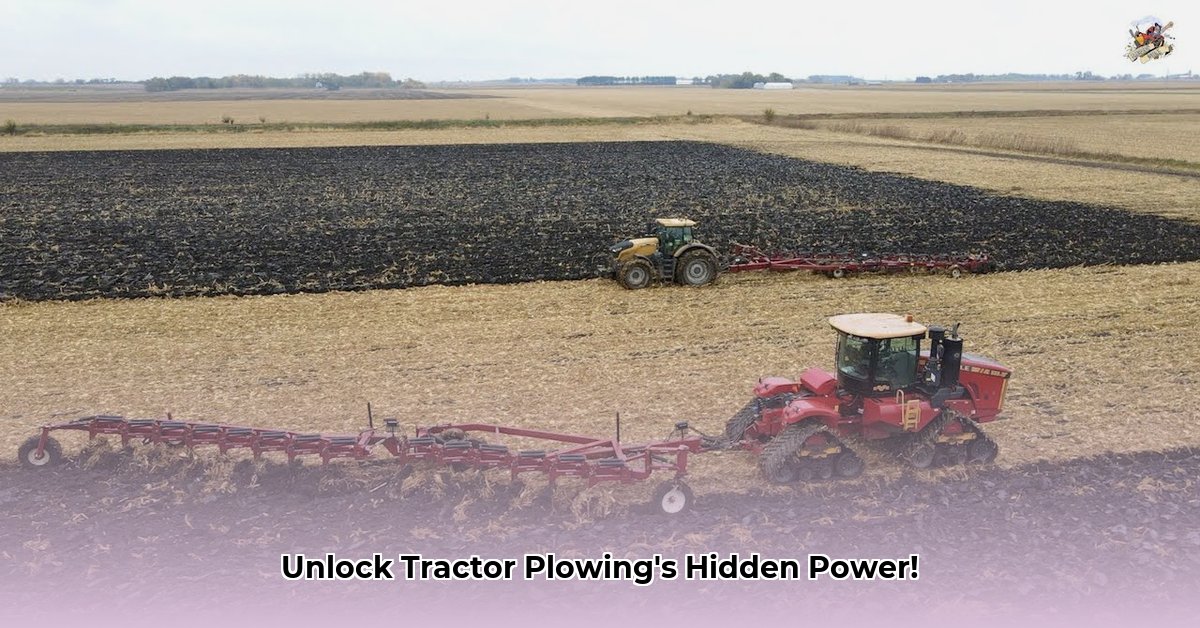
The sight of a massive tractor effortlessly turning over acres of land is undeniably impressive. These modern agricultural giants, some as iconic as the Big Bud, represent incredible power and efficiency. Videos showcasing their capabilities are captivating, illustrating streamlined farming. However, this seemingly simple picture masks a complex reality – one where efficiency often clashes with environmental responsibility. Let's examine the world of tractor plowing and explore the trade-offs. This involves understanding the interplay between productivity and sustainability, considering both the economic benefits and the ecological consequences of large-scale tillage. For more information on tractor plowing techniques, see this resource.
The Allure of Efficiency: Speed and Scale
Large tractors offer unparalleled productivity. They cover vast fields quickly, reducing labor costs and accelerating crop cycles. This speed translates to potentially higher profits and more harvests per season. But, is this speed sustainable if it comes at the cost of environmental damage? The question of long-term sustainability is crucial. We need to quantify not only the immediate financial gains but also the hidden costs associated with fuel consumption, greenhouse gas emissions, and soil health.
Environmental Concerns: More Than Just Dust
Traditional plowing disrupts soil structure, increasing erosion. This resembles damaging a delicately layered cake; deep plowing destroys the careful arrangement of soil layers. This disruption can release significant amounts of stored carbon into the atmosphere, contributing to climate change. Moreover, it often leads to increased fertilizer use to compensate for nutrient loss, further stressing the environment. While many videos highlight powerful machinery, they often lack crucial data on fuel usage and emissions – essential information for evaluating the sustainability of these operations. A truly "green" farming practice must minimize its environmental impact.
Beyond the Plow: Exploring Sustainable Alternatives
The prevalence of intensive plowing raises a vital question: are there better methods? Reduced tillage and no-till farming offer sustainable alternatives. These methods minimize soil disturbance, leading to benefits such as improved water retention and carbon sequestration (the process of capturing and storing atmospheric carbon dioxide). While not as immediately efficient as traditional plowing, they contribute to a healthier ecosystem. The challenge lies in balancing the advantages of tractor plowing with the long-term health of the land. This balance requires careful consideration of various factors, including soil type, climate, and crop selection.
Striking a Balance: Efficiency and Environmental Responsibility
The ideal solution isn't abandoning large-scale farming but adopting innovative approaches that blend efficiency with environmental responsibility. This requires a collaborative effort. Farmers can employ fuel-efficient tractors and precision agriculture techniques (applying fertilizers only where needed). Manufacturers can design tractors optimized for reduced or no-till farming and invest in sustainable fuels. Government policies should incentivize sustainable practices, while researchers need to continue refining better methods. A united approach that shares responsibility for a sustainable agricultural future is paramount.
A Path Forward: Actionable Steps for a Sustainable Future
The following table summarizes specific actions for stakeholders to develop a more sustainable agricultural system:
| Stakeholder | Short-Term Actions | Long-Term Actions |
|---|---|---|
| Farmers | Explore fuel-efficient tractors; trial reduced tillage on a portion of their land. | Invest in precision agriculture; adopt carbon-sequestering practices; participate in soil health initiatives. |
| Manufacturers | Design tractors with reduced fuel consumption and lower emissions; develop attachments for no-till farming. | Invest in R&D for alternative fuel sources; develop advanced tractor technology for minimal soil disruption. |
| Policy Makers | Offer subsidies for fuel-efficient tractors and conservation tillage; fund research on sustainable agriculture. | Develop strict environmental standards for agricultural practices; integrate soil health metrics into policy decisions. |
| Consumers | Choose products from farms committed to sustainable practices; support policies that promote responsible farming. | Educate themselves on the environmental impact of food production; make conscious choices about their consumer habits. |
The future of tractor plowing relies on integrating efficiency with environmental stewardship. It's an ongoing process demanding open discussion, innovative solutions, and a shared commitment to building a sustainable future. Further research is needed to refine our understanding of the interplay between efficiency and environmental impact.
How to Minimize Environmental Impact of Large-Scale Tillage Farming
Key Takeaways:
- Reduced tillage and no-till farming significantly reduce soil erosion and improve water retention.
- Careful planning, incorporating equipment upgrades and weed management strategies, is crucial for successfully transitioning to reduced or no-till systems.
- Government incentives, research, and policy adjustments can support wider adoption of sustainable farming practices.
- Farmers may need to adapt crop choices and fertilizer use to optimize yields in reduced-tillage systems.
- Collaboration among farmers, agricultural advisors, and input suppliers fosters improved techniques and knowledge sharing.
Understanding the Environmental Footprint of Tillage
Traditional large-scale plowing, while efficient, has environmental consequences. It disrupts soil structure, increasing erosion and nutrient runoff, impacting water quality and contributing to greenhouse gas emissions. How can we make plowing more eco-friendly? The answer lies in innovative techniques and responsible practices.
Reduced and No-Till Farming: A Shift in Thinking
Reduced tillage and no-till farming methods offer a solution. Minimizing soil disturbance preserves soil structure, improves water infiltration, and reduces erosion.
Practical Steps for Minimizing Environmental Impact
- Assess Your Soil: Understand your soil type and its properties before implementing changes.
- Gradual Transition: Transition to no-till gradually to minimize potential setbacks.
- Invest in Appropriate Equipment: No-till planting requires specialized equipment.
- Effective Weed Management: Implement integrated pest management (IPM) strategies.
- Crop Rotation and Cover Crops: Enhance soil health and biodiversity.
- Monitor Soil Health: Regularly monitor soil health indicators.
The Economic Equation: Balancing Costs and Benefits
Transitioning to reduced or no-till farming involves initial costs. However, long-term benefits include reduced fuel consumption, lower labor costs, and often improved yields.
Collaborative Solutions: Working Together for a Better Future
Government incentives, research funding, and industry collaboration are crucial to accelerating the adoption of environmentally friendly practices. Sharing knowledge and best practices among farmers is key to success.